Speeding Up Your FCP Workflow: From Ingest to Final Cut
Wiki Article
In the world of content creation, speed is everything. The faster you can turn a raw idea into a published video, the better. Final Cut Pro is known for being fast—the "magnetic timeline" is a huge time-saver. But the actual cutting is only half the battle.
The real bottlenecks usually happen before you make your first cut. It’s the syncing, the organizing, and the setup. If you are spending hours prepping, it doesn't matter how fast you know how to split clip in final cut pro. You are already behind.
Identify the Bottlenecks
Where does your time go? For most editors, it goes into three buckets: Syncing audio, watching raw footage to find "good" takes, and fixing technical errors.
The Sync Drag
We have talked about this a lot. FCP's native sync is hit-or-miss. When it misses, you lose 20 minutes manually aligning waveforms. That is 20 minutes you aren't being creative.
The Review Fatigue
Watching hours of raw footage just to find the 5 minutes of gold is exhausting. It leads to "editor's fatigue," where you settle for okay shots because you are too tired to find the great ones.
Keyboard Shortcuts Matter
Once you are in the edit, speed comes from muscle memory. You should never be clicking the blade tool icon. You should know how to cut video in final cut pro using the shortcut (Command + B).
Trimming on the Fly
Learn to use "Top and Tail" editing (Option + [ or ]). This trims the start or end of a clip instantly. These tiny savings add up to hours over a year.
The Role of AI in Speed
However, keyboard shortcuts can't fix a bad workflow. This is where AI automation comes in. Tools like Cutback are designed to eliminate the pre-edit bottleneck entirely.
Automated Ingest
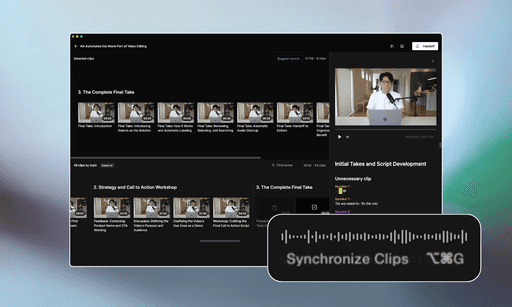
Imagine if you could dump your SD cards into a tool, go grab a coffee, and come back to a project that is already synced, organized, and has the bad takes removed. That is what Cutback's Selects app does.
The Head Start
By starting with a cleaned-up timeline, you are effectively skipping the first 30% of the editing process. You are jumping straight to the storytelling. This is how solo creators are producing daily content without burning out.
Hardware vs. Software Speed
We often buy faster computers to edit faster. But a faster computer won't sync mismatched audio any better—it will just fail faster. Smart software improves your workflow in ways that raw hardware power cannot.
Conclusion
Speed in Final Cut Pro isn't just about how fast your fingers move. It’s about removing friction. By combining keyboard mastery with AI tools that handle the boring setup work, you can double your output while actually doing less work. That is the future of editing.
Report this wiki page